
Revolver Rescue

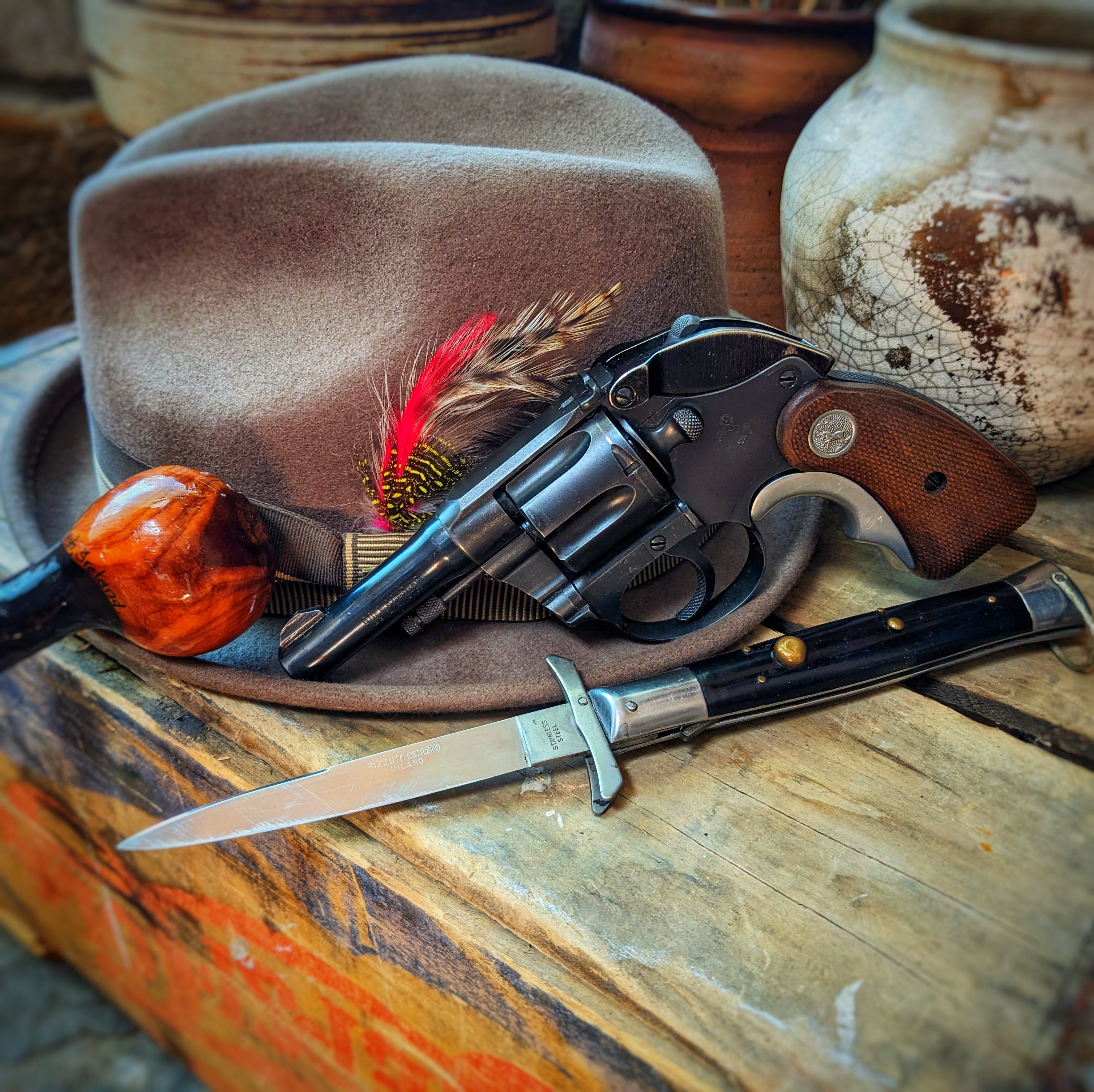
Now that the hunting season is over, it’s time to get back to some handguns. I have several revolver articles coming out over the next couple of months, and, as always, if you would like last year’s articles in print or Kindle format, you can purchase them HERE.
So I get a call from a friend, and chances are, if you are a fan of stylish hats, snubnose revolvers, and hardboiled detective novels, you know the guy (Snub Noir). To make a long story short, he tells me he has this Colt (Police Positive) in 22LR that has been worked on by a couple of gunsmiths and still isn't quite right. It has had the barrel replaced with a 3-inch model from a Colt Courier, but it shoots a foot and a half high at 10 yards and makes groups that look more like a scattergun than a revolver, plus he says it won’t fit in his ankle holster. He wants to know if I can fix it. You hear something like that over the phone and get a little squeamish about saying, yeah, I can fix it, but here we are.
I opened the package to find a carefully wrapped Colt with no front sight, and I thought, "Well, that would make it shoot high." Upon closer inspection, the sight was still in the box; it had just been dislodged during its travels.
Let’s see what we got here.
After an initial inspection to ensure the timing was correct and nothing else contributed to the problems, I focused on the new barrel since undoubtedly this was the problem—well, not the entire problem.
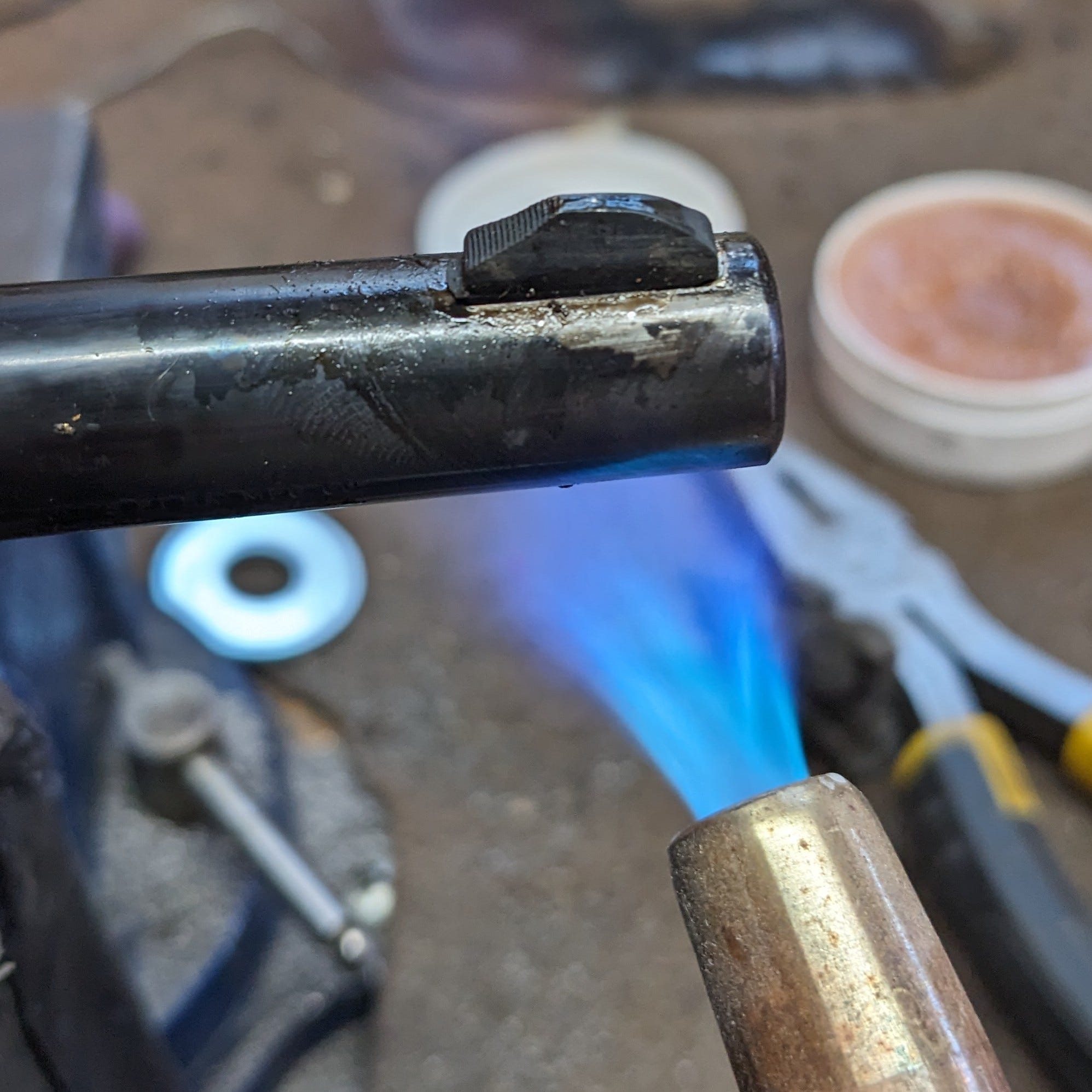
I began by resoldering the front sight back onto the barrel.
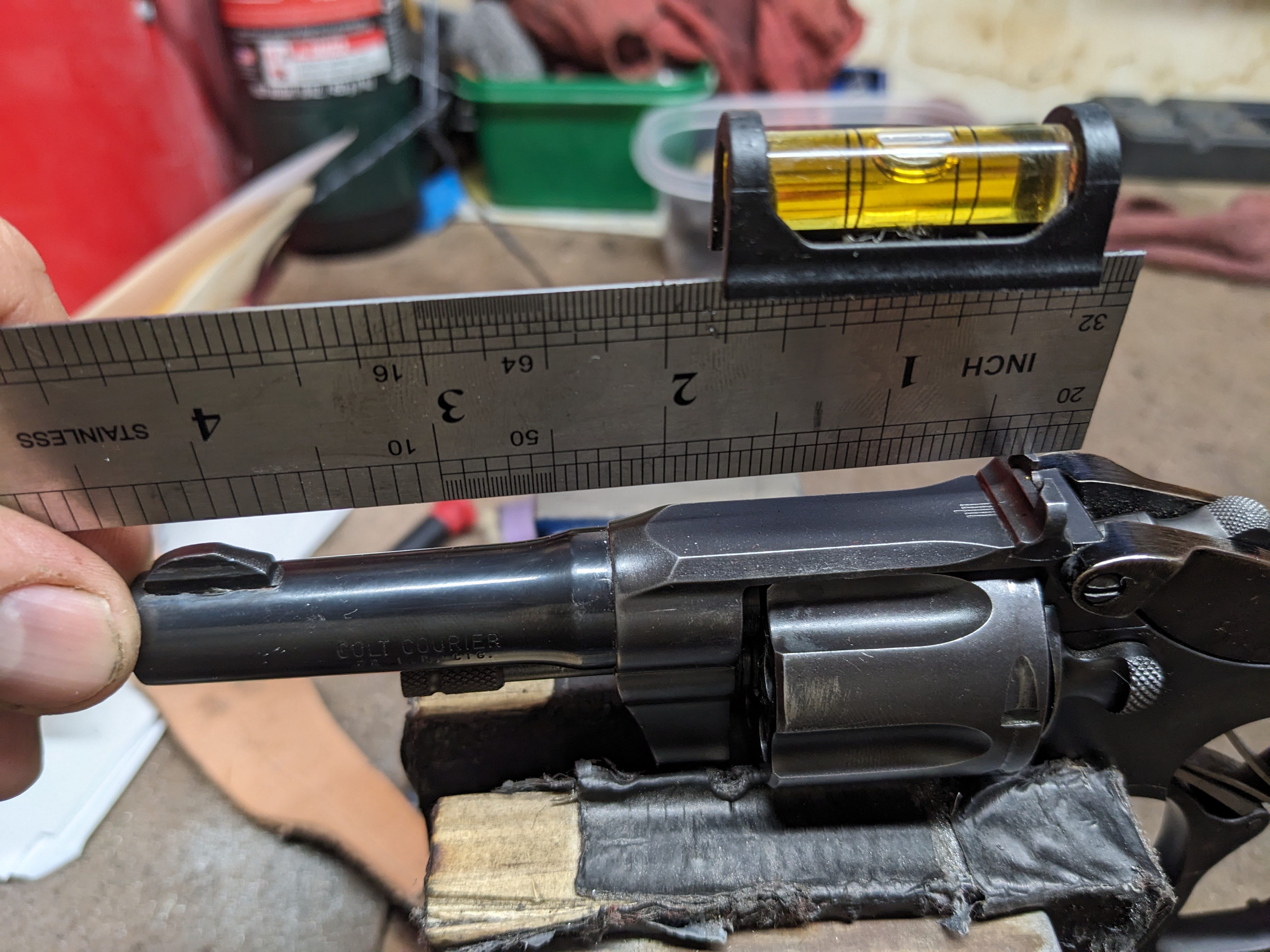
As you can see from the photos, this revolver began its life as a flat-top target model, and it came with an adjustable rear sight that was a full inch high. This was causing the high shots on paper; the Colt Courier barrel was fitted with a sight intended for a gun with a trough sight (that's when they simply cut a groove down the back strap). Remember that when we sight in iron sights, we move the rear in the direction we want the bullet to move on paper, so a taller rear sight would make for a very high shooting gun compared to a trough sight. The solution was either a taller front sight or a shorter rear sight, since one criterion for the build was ankle-holster carry; a shorter rear sight was the solution. Luckily, as a gunsmith and a confirmed hoarder, I had a shorter Colt target model rear sight sitting in my pile of used parts. However, it was still too high after shooting, so I reprofiled it by lowering the top and deepening the trough in the sight. The whole thing was brought down to within ⅛ inch of the backstrap.
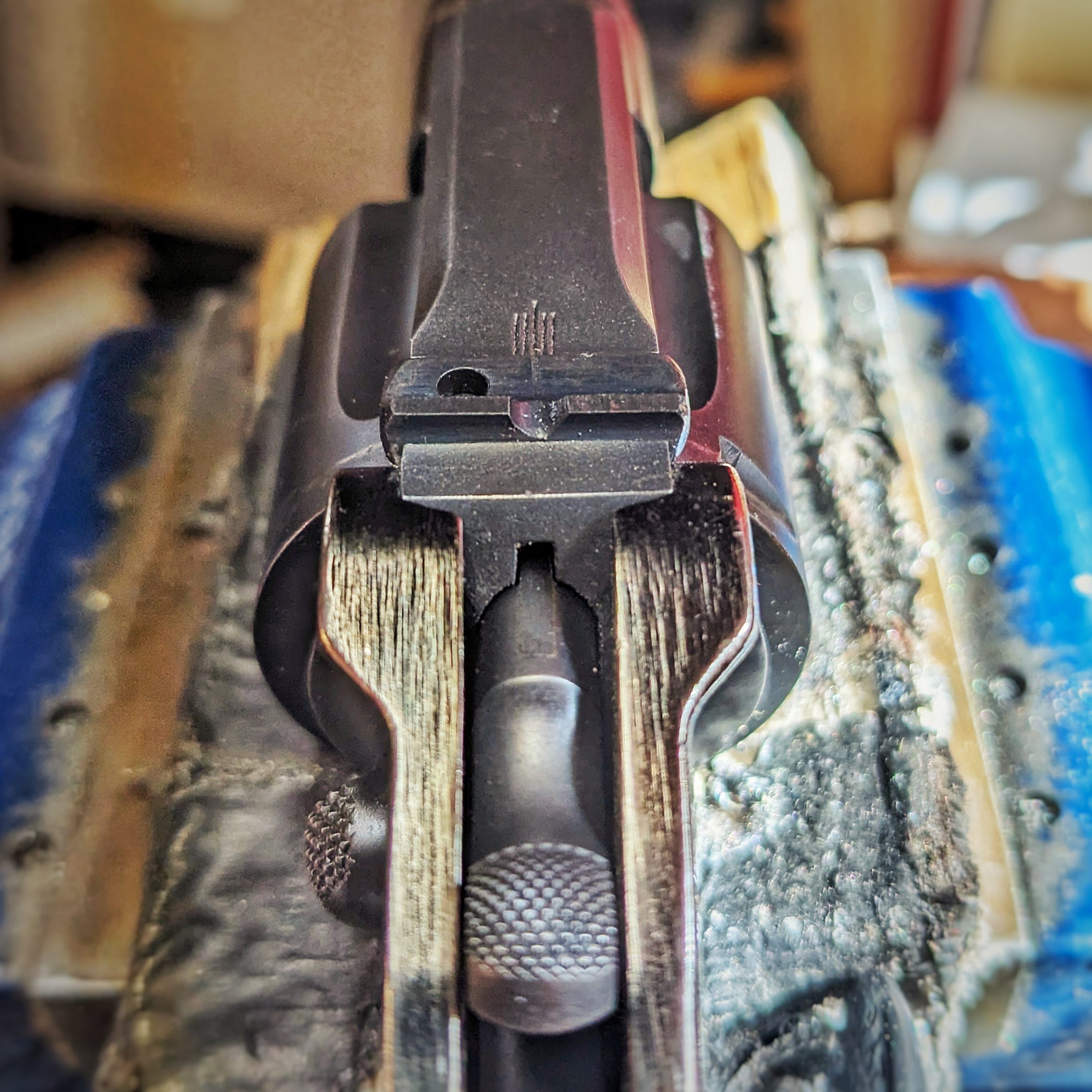
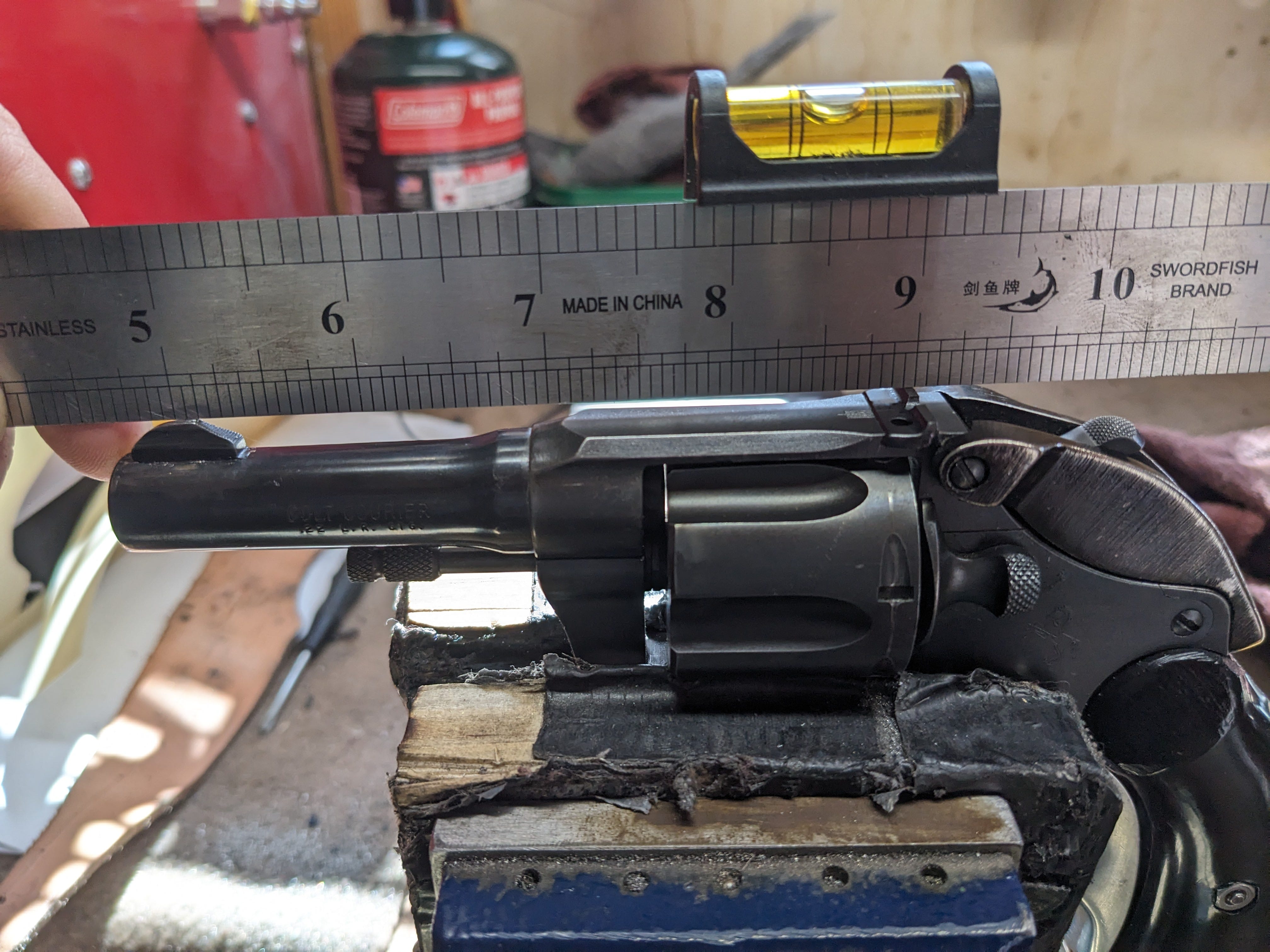
If you are ever in a situation where you are trying to decide how tall a sight to get, use this trick. Put the gun in a vice and level the bore, then rest a straight edge ruler on your existing sight with a bubble level on it, or use a small carpenter's level. This will get you close. I always add a little extra to the front so I can file it down during the sighting process. In this case, I worked on the rear since the front was as tall as it was going to get. In the pictures, you can see the discrepancy between the two sights.
Accuracy.
There are a host of things that could cause accuracy issues with revolvers. In the case of this gun, I narrowed it down to the barrel. On a revolver, three parts work together to form an accurate barrel: the forcing cone, bore, and crown. Everything looked good on this gun; the Colt Courier barrel was in excellent shape. So, I went into more detail and started with the forcing cone. Forcing cones can be measured with a tool known as a plug gauge.
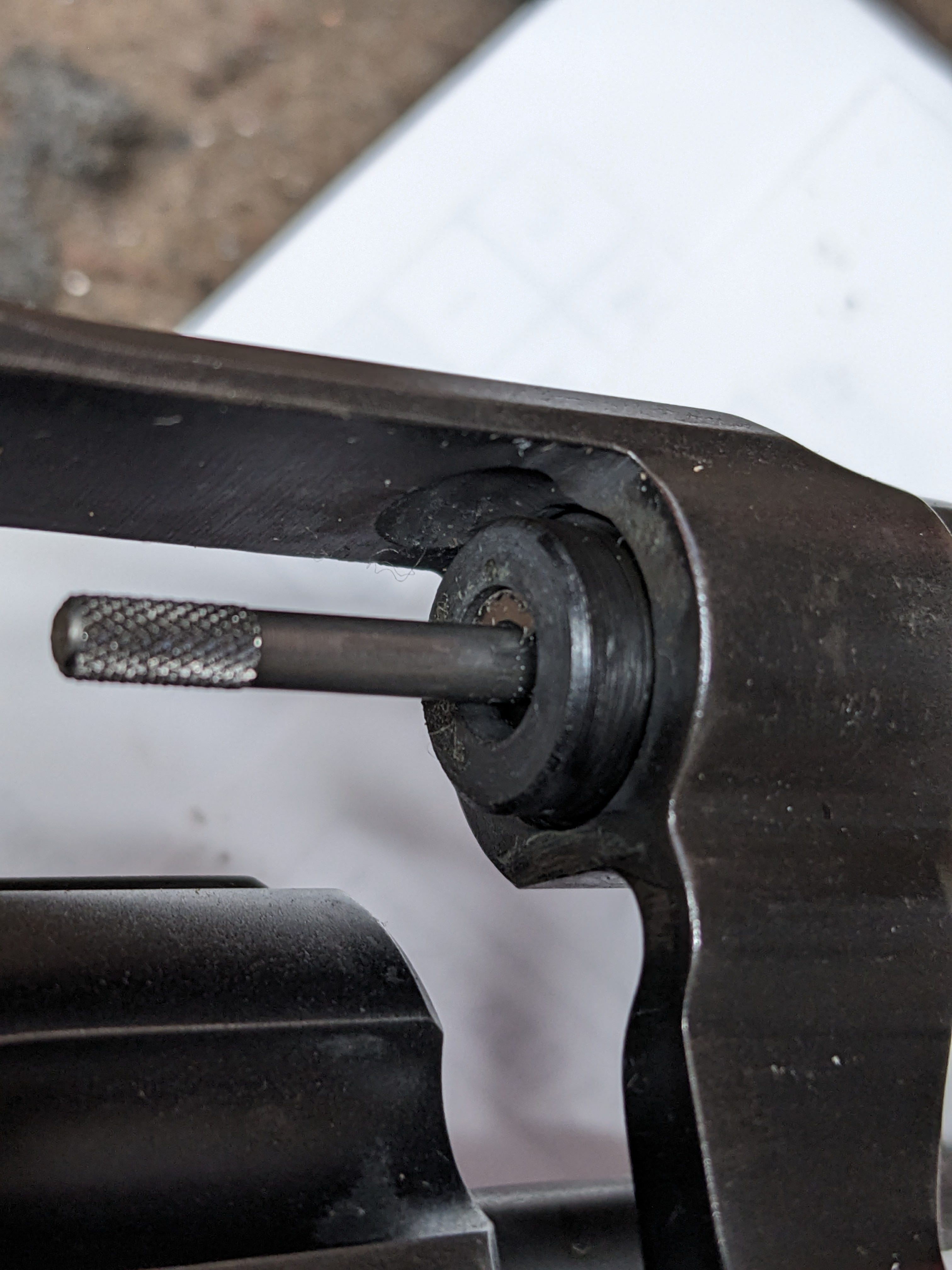
As you can see from the photos, the plug gauge is below the surface of the forcing cone; that's bad, but it was only slight, and the forcing cone looked original. There was some fouling buildup inside the forcing cone, so I decided to run my forcing cone reamer in it just to clean it up, and that's when the real problem presented itself. I inserted the rod for the forcing cone reamer into the barrel, and since it is precisely 22 caliber, it stopped dead right in the middle of the barrel. This is known as a bore constriction, and it is not conducive to accuracy unless the constriction is at the muzzle. In a perfect world, you want your bullet to enter the bore, deform to fill the rifling grooves, stay consistent down the bore, or get ever so slightly tighter at the muzzle. When a constriction happens anywhere else in the bore, the bullet shrinks to fit the constriction, then it's loose in the bore for the rest of its trip.
Now we know the problem, but how do we fix it? A technique called fire lapping can be used to remove a constriction on a centerfire firearm. Fire lapping is a process of shooting lead bullets that have been impregnated with a fine abrasive compound. That being said, I have never needed, nor thought of, lapping a 22, and I’m not sure how one would do it, since you can’t really handload your own rimfire ammo. So instead, I impregnated a very tight patch with a fine abrasive and worked it back and forth in the bore with a cleaning rod. I could tell where the constriction was and tried to work only in that area. I cleaned everything up and went out and shot the gun.
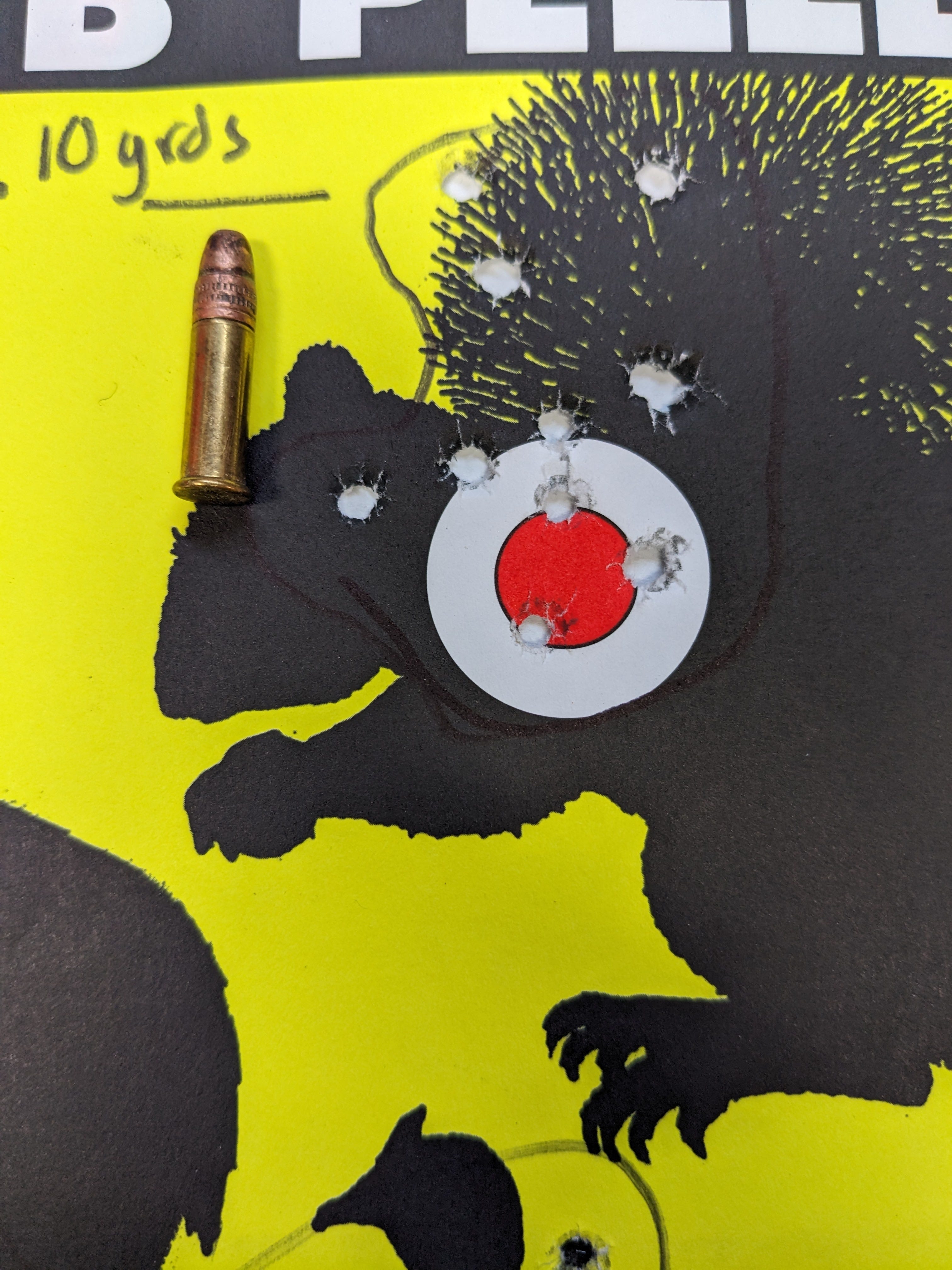
It worked! Groups shrunk to about 1.5-2 inches at 10 yards, and opened up to about three at 25 yards. This accuracy is nothing to write home about, but it is certainly functionally accurate for this gun’s intended purpose as an understudy to a larger caliber snub nose revolver. Considering the short sight radius and the new minuscule drift adjustable sights, I’m not sure I could shoot much better than that anyway. Perhaps more lapping would improve accuracy, but I feared too much would damage the barrel beyond repair, and I really did not want to go searching for a three-inch Colt barrel to replace it.
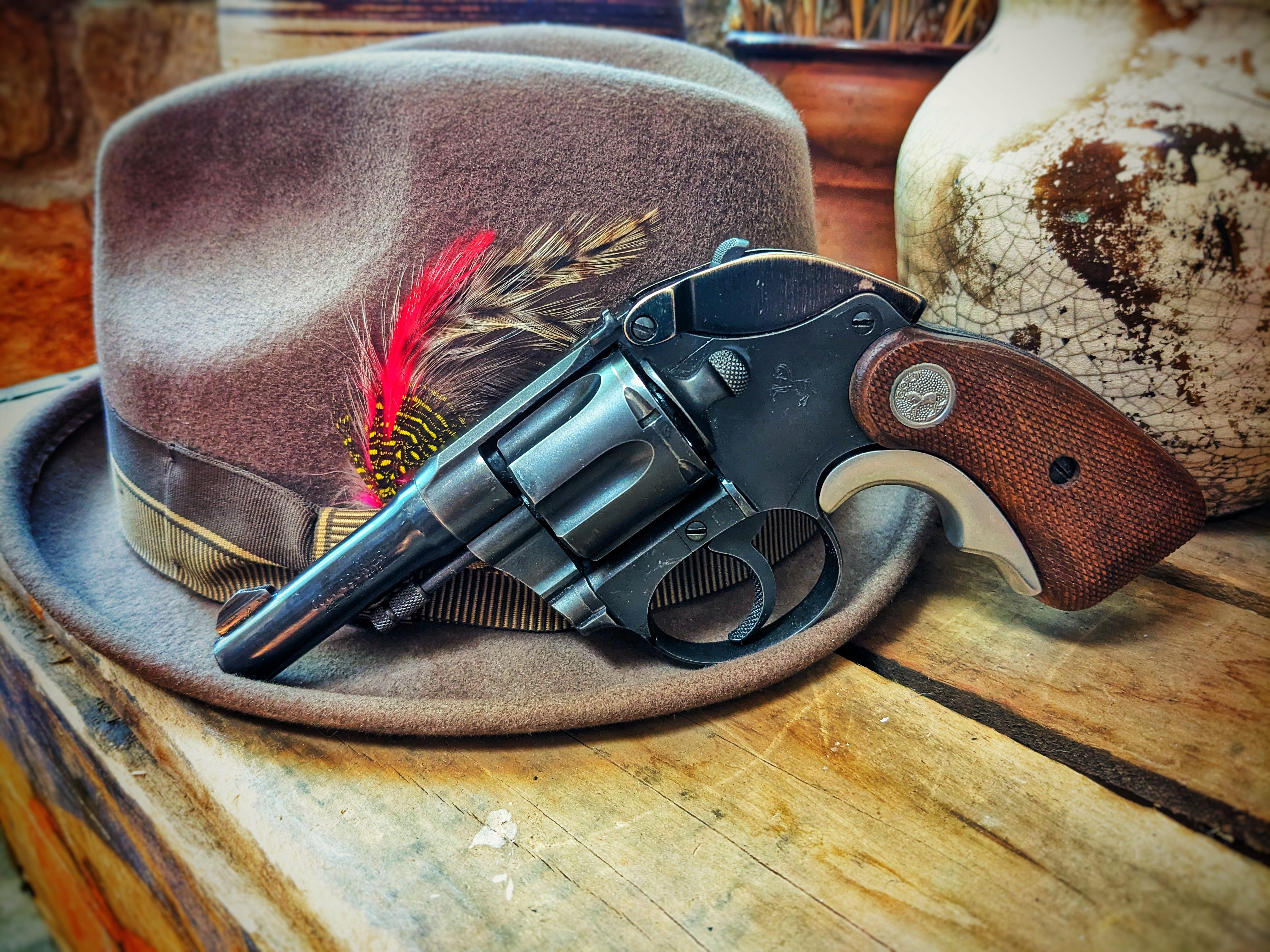
There we have it. We went from a gun that could only be used as a doorstop to a fun, functional training aid. This gun is an awesome, unique firearm. I love the adjustable sights on it, which you don't often see on a weapon of its size, and its classic looks, with the wood stocks and hammer shroud, make it an eye catcher. Michael, I hope you enjoy this gun for many years to come, and if any of you have a gun with these kinds of problems. I know a guy.
I’ve been following this pistol on the FB page. I’m so glad you could make it functional. Fascinating info in this article. Keep up the great work!
What a cool old gun. I’m mainly a S&W guy and somehow it had escaped my notice that Colt used to make the Police Positive with a target sight. Thanks for an interesting article.