
Mouse Guns

Clint Smith has one of my favorite quotes for carrying in self-defense. If you haven’t heard of him, Clint is a shooting instructor who taught under Col. Jeff Cooper at the famous Gunsite Academy before starting his own shooting school in Oregon, known as Thunder Ranch. It has become one of the most renowned schools for shooting instruction in the nation. He has also become famous in the age of social media for his harsh, to-the-point, and often off-color remarks on self-defense and firearm ownership. I’m pretty sure my spirit animal lies somewhere between @clintsmith.csss and @stateline_shootist. I digress. The particular quote from Clint that I am referring to is, “When you are carrying, every gun is too big, and when you are in a gunfight, none of them are too big.” I removed some swear words, but I think a truer statement about carrying for self-defense has never been made. It’s safe to say that Clint would give very little thought to the topic of mouse guns. Generally speaking, I agree with Clint. A person should strive to carry the most capable firearm they can carry every day, but I think mouse guns have practical uses and, when properly loaded, can be used effectively for defensive work.
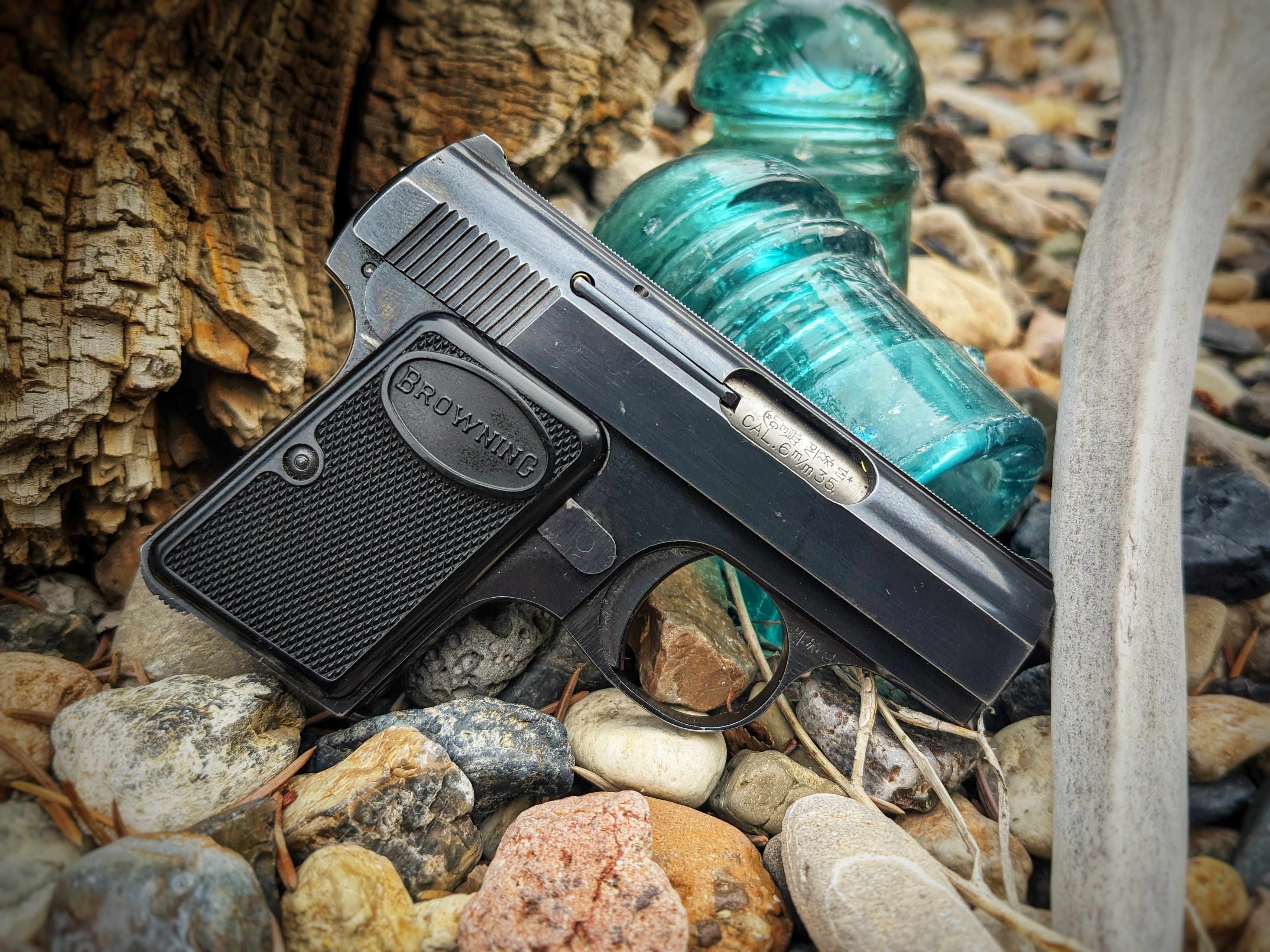
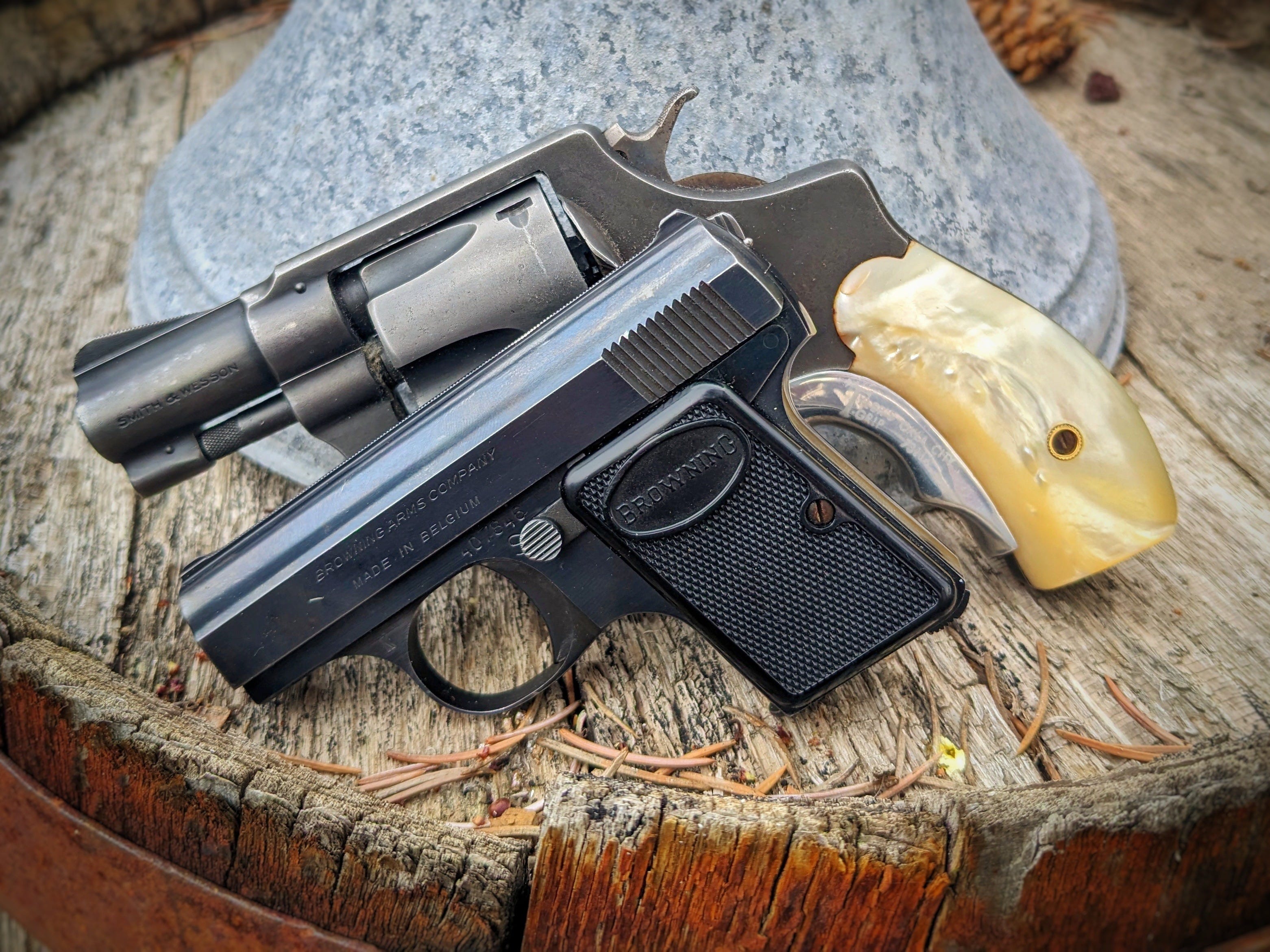
You may be asking, what the heck is a mouse gun? A mouse gun is the term we use for very small defensive guns, often so small as to be ridiculous. Mouse guns, while they are all made with defense in mind, are often chambered in some hilariously underpowered cartridges. I have occasionally found reasons to carry mouse guns, but mostly they are a collecting interest of mine. I have had, sold, and swapped many mouse guns over the years, and while they may lack firepower, they are certainly not lacking in fun.
Why a mouse gun?
Mouse guns are a blast to collect. Since the dawn of firearms, designers have been trying to pack more firepower into the smallest package humanly possible. It’s always fun to see how manufacturers have attempted such a feat. From the deringers and pepperboxes of the old west to modern micro compacts in 9mm, mouse guns can run the range from useless to practical defense weapons.
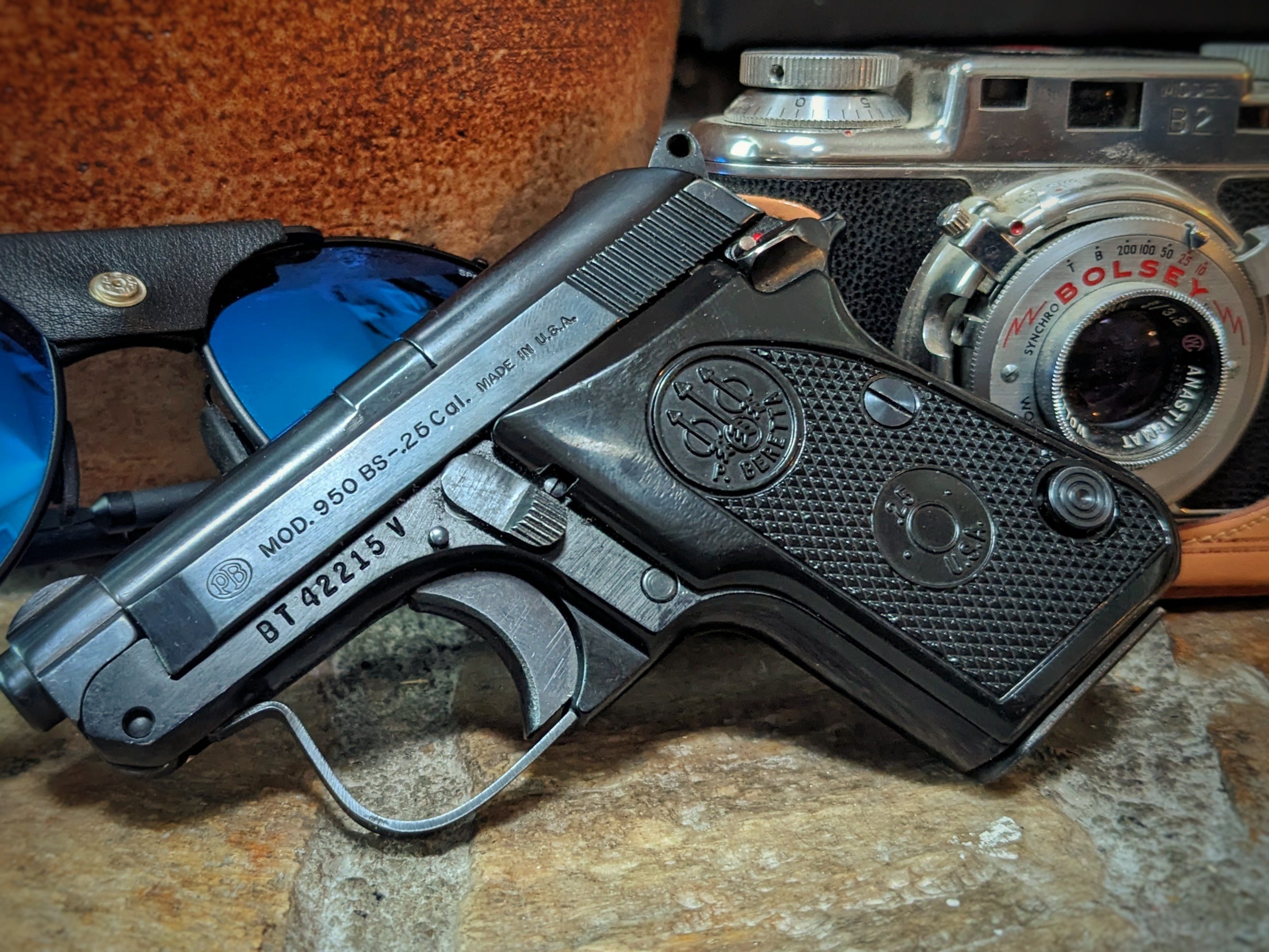
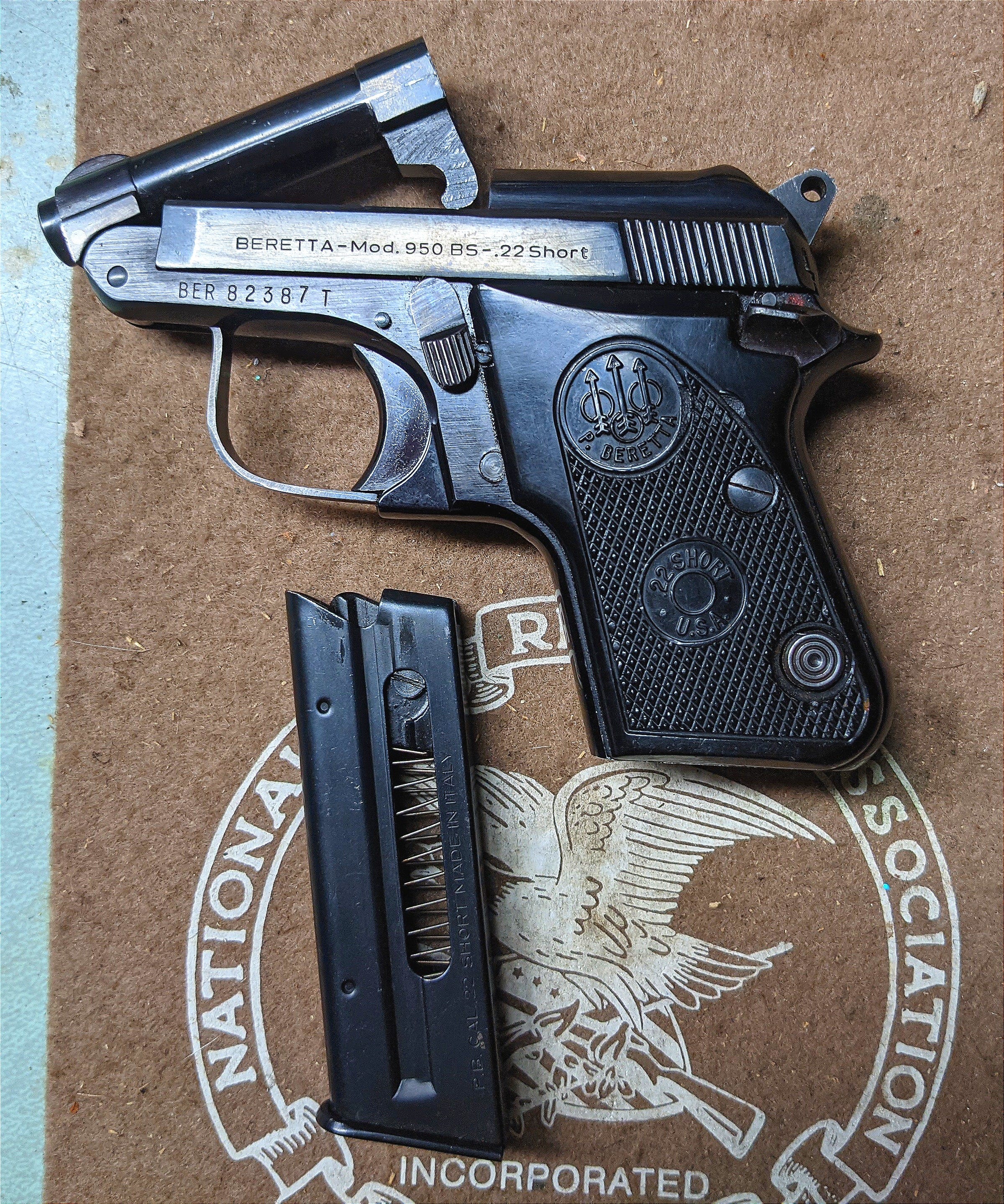
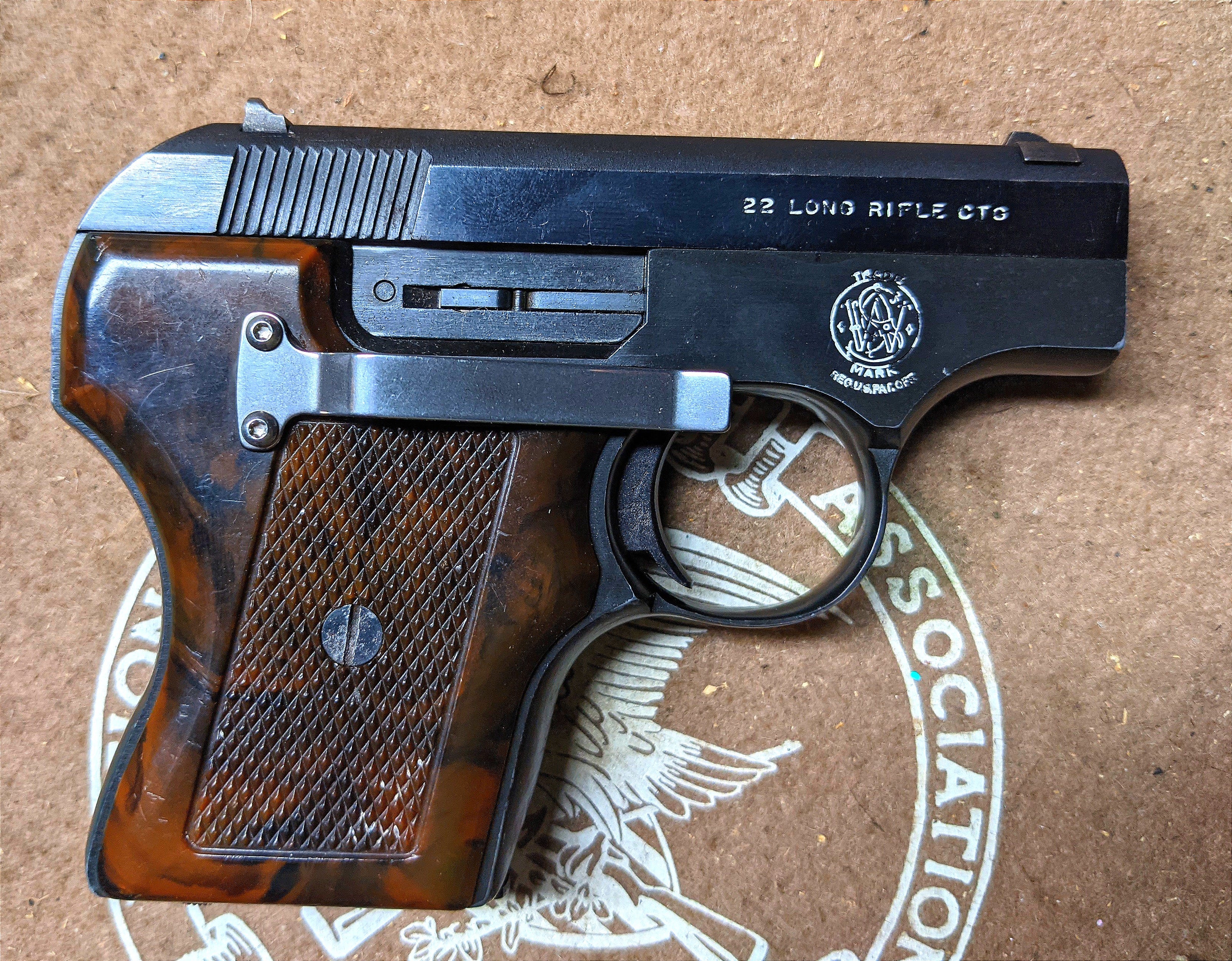
I define mouse guns as anything that will fit in your back pocket. I wouldn’t classify a Smith & Wesson J-frame as a mouse gun, but I would probably classify a Taurus View as one. The Taurus View was a short-lived, 5-shot revolver with the same frame size as a J-frame, but with a barrel that barely clocked in at an inch and a truncated grip that literally only had enough real estate for a single finger. The “View” portion referred to a Lexan-type sideplate that reduced weight and allowed the owner to see the gun’s inner workings. It was absolutely bonkers, and on my short list of mouse guns, should I find one at a reasonable price someday. I have often thought about recreating my own version using an old Smith, a project for down the road. I will intermingle some images of a few of my mouse guns, but probably the most quintessential mouse gun was the FN-made Baby Browning. Introduced in the 1930s, it was essentially a shortened, simplified version of the 1905 model. Chambered in 25 ACP, it’s more likely to draw blood from the shooter due to its vicious slide bite than from any assailant, but it was quite popular and remained in production for over 40 years. I own a Baby Browning, and while it is absolutely atrocious to shoot, when you need a gun that fits in an Altoids tin, it’s one of your few options.
Can they be useful?
Is there any point to carrying a mouse gun? Many self-defense experts would say no, and Clint would certainly “encourage” you, in his delicate way, to carry a bigger gun. That is not bad advice. I, too, would always recommend that everyone carry as big a gun, both physically and ballistically, as they are willing to carry daily. The word “daily” is the critical point in that statement. It doesn’t matter what hand cannon you have chosen as your sidearm if all it does is spend its life on your nightstand. I have pocket carried revolvers for many years now, and as I write this, I have a Smith Model 327 in my pocket, an N-frame 8-shot 357 Magnum. It’s a substantial revolver that, while covered, tests the limits of the word concealed. Pocket carry has its limitations and is not ideal for dangerous encounters. It’s slower to the draw and, in certain sitting positions, almost impossible to draw. I like it though. When I put on a pair of pants, it goes in the pocket, and there it remains, always with me, when I am out, when I am home. It doesn’t get put away when I walk through the door, it doesn’t get set on a table and forgotten while I am watching TV. As long as my pants are on, my gun is on. It’s hands down the most comfortable way to carry, nothing jabbing your sides or impeding movement. You don’t have to find a place to set it when you use a public bathroom. It’s not perfect, but it works for me.
This is the situation where mouse guns shine. No, they do not have “Stopping Powwaa,” they do not have 17 rounds in the mag, and they are certainly not scary looking, but they are a gun, and you have it with you. That’s what’s important. There is no reason to forget them at home because they are inconsequential to your life. Taking up little more room than your wallet or your keys, they are the ultimate “I’m covered” gun. Often, people refer to small guns as the “backup gun,” a gun that you can get to when your primary carry goes down or runs out of ammo. I suggest we think of it as a primary weapon. It’s primary because it is the gun that is ALWAYS on us, every waking moment. The secondary gun is the fighting weapon, the one we want when things go wrong. Chances are, when things do go wrong, it’s probably going to be the day you told yourself, “What could go wrong?” That is a lot easier to swallow if you have that primary in your pocket.
Understanding limitations.
There are massive limitations to carrying a mouse gun, with lethality being one of them. Very few “pocket guns” are chambered in anything that will pass the FBI standard for a defensive weapon (15 inches of penetration in ballistics gel, after passing through two layers of denim), and the ones that can do that often only have a couple rounds. One has to orient their thinking to the gun they are carrying. If all we have on us is 6 rounds of 25 ACP, we are not going to be wading into a gunfight, taking center of mass shots. We are going to place our shots and run like hell. I often refer to mouse guns as “BTBK” (better than brass knuckles) because that’s about it. They are not going to win a gunfight, but they might save your life if you place your shots at touching distances and at soft targets. Your 25 ACP ammo is plenty when your firearm is in, or very close to your assailant’s eye socket, before it goes off. Another reason I like revolvers is that you can use your revolver as a weapon itself, without worrying about taking it out of battery or inducing a jam.
As far as ammo for mouse guns goes, I’m not sure what chambering is truly the best. One can read ballistics tables and foot pounds of energy, but none of that translates into real-world lethality when your life is on the line. 9mm has become the gold standard for defensive weapons, but in my mind, it is truly the bare minimum for a fighting cartridge. I’ve seen coyotes shrug off 9mm, and they weigh about 40 pounds max. Only you can decide what constitutes an adequate cartridge. The important thing is understanding what your cartridge can do, and adjusting your training to match that. If you know that penetration is a problem with your gun, you also know that defensive distances need to shrink to match it. Luckily, the vast majority of defensive situations occur at touching distances. This is the situation where a mouse gun can shine. When in close proximity to a bad guy, they are not going to just let you casually draw your full-size, 17-round, ported, and optic-equipped combat gun without noticing and giving you a fight over it. Mouse guns, on the other hand, can be drawn more discreetly and from locations an assailant may not expect, giving you some level of surprise. For great examples of both wrestling over guns and drawing on a distracted attacker, check out the training from the guys at Shivworks.com. Their training emphasizes not just shooting, but the fight that may ensue beforehand. It’s good stuff, and worth subscribing to their Instagram just for the entertainment value.
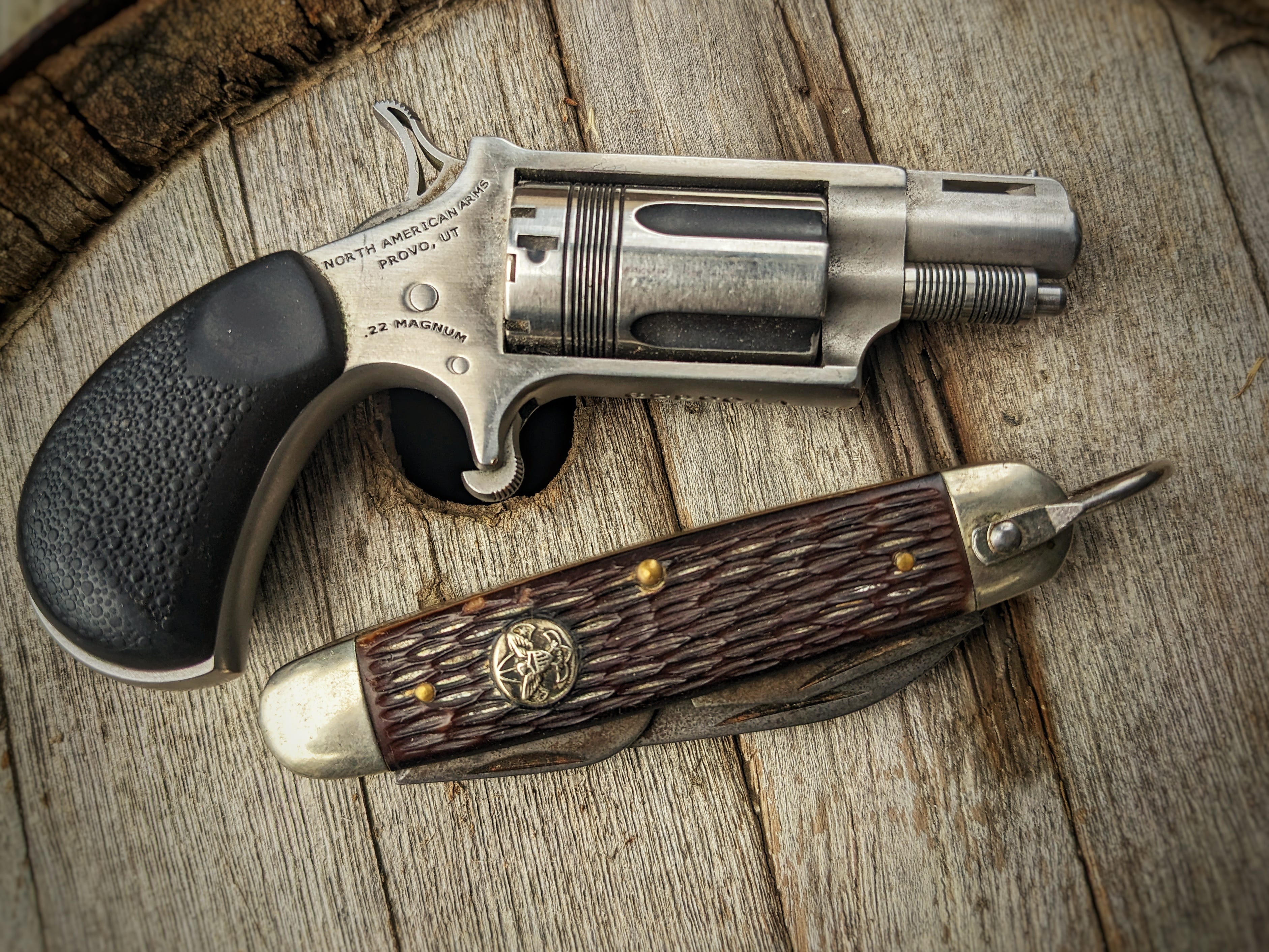
Mouse guns also allow you to carry in places that may not be quite as “permissible.” I’m not telling you to carry anywhere illegal, but I am telling you to stay strapped or get clapped. Over the course of my life, I may or may not have slipped through multiple lackadaisical security checks at concerts and such with my NAA minirevolver safely stowed on my person. It’s pretty easy when you have a firearm that can fit in the fifth pocket of your jeans. It also teaches you how pathetic security is at large events, but that’s an article for another day.
Mouse guns, I wish existed.
There are some really great guns out there that I classify as mouse guns. The micro .380 class of guns available today is awesome; they are reliable, powerful (for their size), and can be had for very reasonable prices. These are all tiny guns that are so much more capable than the mouse guns of the past. There is still something I would like to see, though. I have already mentioned my NAA Minirevolver. Mine is chambered with five rounds of 22 Magnum. It’s the only mouse gun I have that really sees any time in my pocket. Coming in at about the size of a pocketknife, it can be concealed anywhere. I take it when I can’t carry anything else, and it also goes hunting with me. I often have a large revolver strapped to my hip when hunting, so the NAA goes in my pocket. That way, if I take my large revolver off for any reason, I’m not completely defenseless. It also works well for going to the gym, the beach, weddings, or anywhere where your clothing may not be up to handling or concealing a full-size handgun. That said, I would like to see NAA make a version slightly larger and chamber it for .32-caliber cartridges. Even if it were double the size of the current mini revolver, having something that small chambered in .32 ACP, .32 H&R, 327 Federal, or even the now almost defunct .30 Super Carry would be an amazing, ultra-concealable handgun that actually packs enough power to give some level of confidence.
Go get a mouse gun.
Everyone should have a mouse gun, at least if you believe going unarmed is not an option. If the only defensive gun you have is a full-size Glock with three extra mags, I guarantee there are situations where that thing stays home. Get a mouse gun, throw it in your pocket (holstered, of course), and always be armed. Consider your firearm as important as your underwear…OK, maybe more important. I’m not telling you to stop carrying larger guns, as Clint will tell you, “in a gunfight, your gun is never too big.” Having that little extra insurance on you, which has almost zero impact on your daily life, is an easy sacrifice to make. Consider choosing a small gun as your “primary,” the gun that goes absolutely everywhere with you, then strap your secondary combat gun on as much as you can. Mouse guns certainly have their limitations, but if we know those limitations and adjust our mindset and training to accommodate them, then a mouse gun can be a force multiplier when the chips are down, or when our larger gun is out of commission or unavailable. Plus, they are fun to collect and shoot. Over the years, I have fallen in love with mouse guns. I love seeing how gun companies have struggled to successfully, and a lot of times, unsuccessfully pack as much firepower into as small a package as possible. When you hold one, you can’t help but feel like a spy or a detective, casually ordering a cocktail before getting the upper hand on the bad guy.
I could be misremembering, but I think I once saw a derringer chambered in 44 magnum. Adequate stopping power in a small package, but I shudder to imagine the recoil.
I never have figured out why the North Koreans had such an affinity for .25 Cal ACP Colt and Baby Browning pistols. I'm guessing that it is due to their size and concealment. Whenever we, or ROK Army units responded to NK infiltration activities, and had results, the infiltrators always had .25 Cal ACP pistols, sometimes with suppressors and sometimes the odd .32 Cal ACP VZ-61 Skorpion. I am certain that there were some infiltrators who slipped by and maybe they got some value from carrying their .25 Cal pistols, but they were useless for the ones I witnessed.