

First, thank you to all my readers. As always, you can purchase my first book HERE, along with many of my past articles, but I'm also finishing up my second book, and it will be available soon. So make sure to check back often. Thanks again for your support
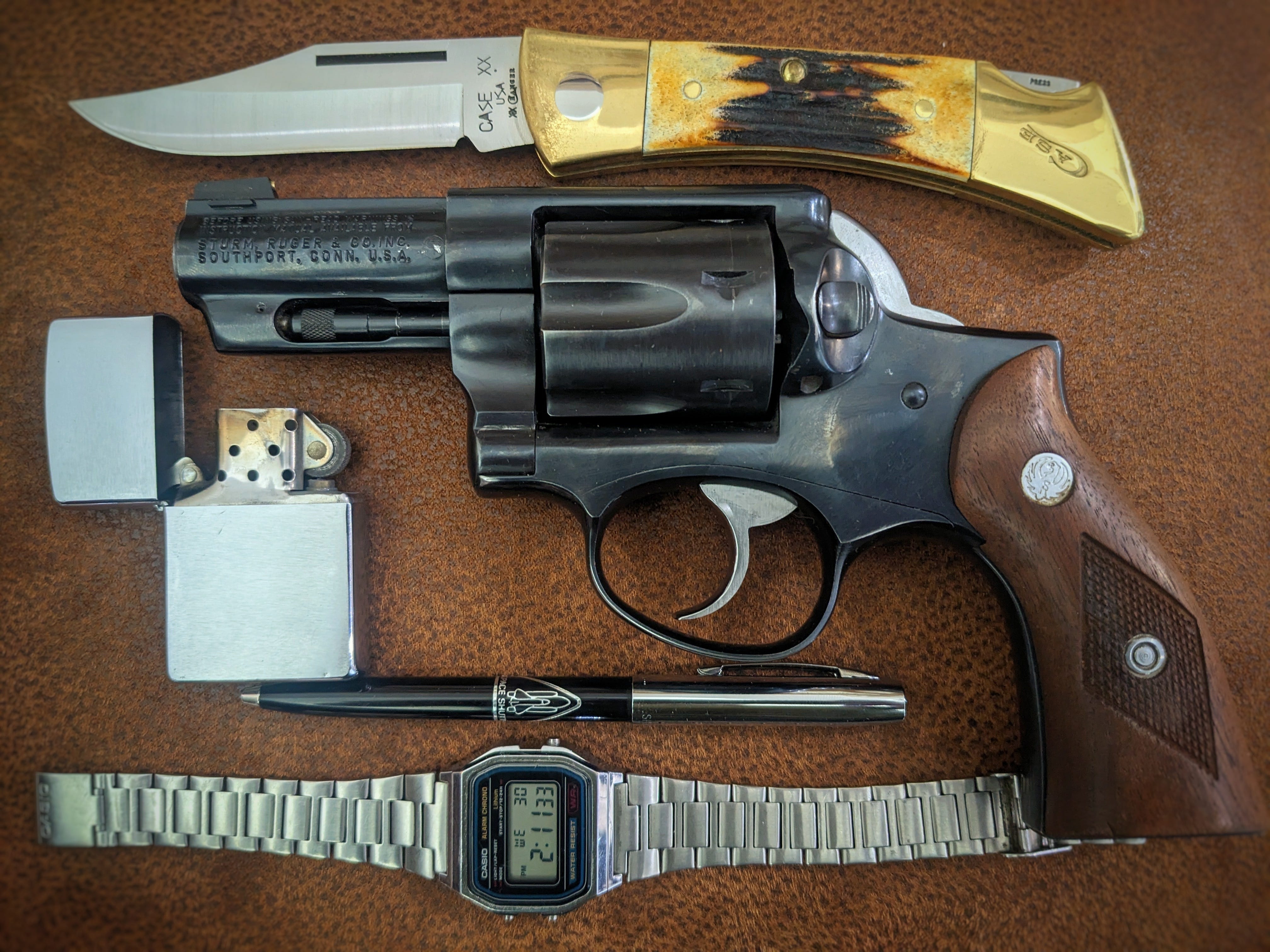
Not long ago, a good friend came to me with a Ruger Service Six and, in a nutshell, said, “You’ve got a blank check; do what you do.” Well, how could I say no to that? It was a four-inch model, and his only instruction was to shorten it… No problem. The only catch in this whole project was that it was a Ruger, not the Smiths and Colts I am used to. So for this project, we'll not only make this Service Six more combat-ready, but I'll also discuss what makes Ruger's “Six” series such a great, overlooked option.
What’s so special?
Ruger's “Six” series of guns, including the Service-Six, Speed-Six, and Security-Six, were all variations on the same gun. Ruger produced them from 1972 to 1988, until they morphed into the GP100 platform we still know and love today. The Six series was Ruger’s attempt to break into the military and police market dominated by Smith & Wesson and Colt. What made the Six series special? Like all Ruger firearms, they were built and sold for their robustness. The Six series was known as double-action revolvers you could shoot full-house loads through without worrying about them coming apart. Thicker frames, larger cylinders, offset cylinder-bolt notches, no sideplates, and, of course, Ruger’s famous investment-casting construction method. While Ruger did well in the military and police market, it never surpassed its competitors. Ruger's main selling feature is also its biggest downfall, and that still holds true today. Yes, Rugers are stout and reliable guns, but they're also quite heavy. For people who carry a gun on their hip every day, weight is not a thing to be taken lightly (pun intended). That said, the Six series holds a special place in my heart, but as a gunsmith, I rarely see them; they are as robust as they are claimed to be, and aside from the weight, they make excellent personal defense weapons. The actions are easy to tune, and the double-action trigger pull is smooth with little stacking; you can shoot them all you want without fear of “wearing them out” because they just don’t.
I have wanted to build myself a custom Six series gun for quite some time but haven’t yet stumbled onto the right donor gun, so you can imagine my excitement when my friend brought me this Service-Six. I have a strong feeling that this will be one of those guns I have a hard time giving back. So let’s see what we can do to make this gun a little more practical for modern-day self-defense.
Get to work.
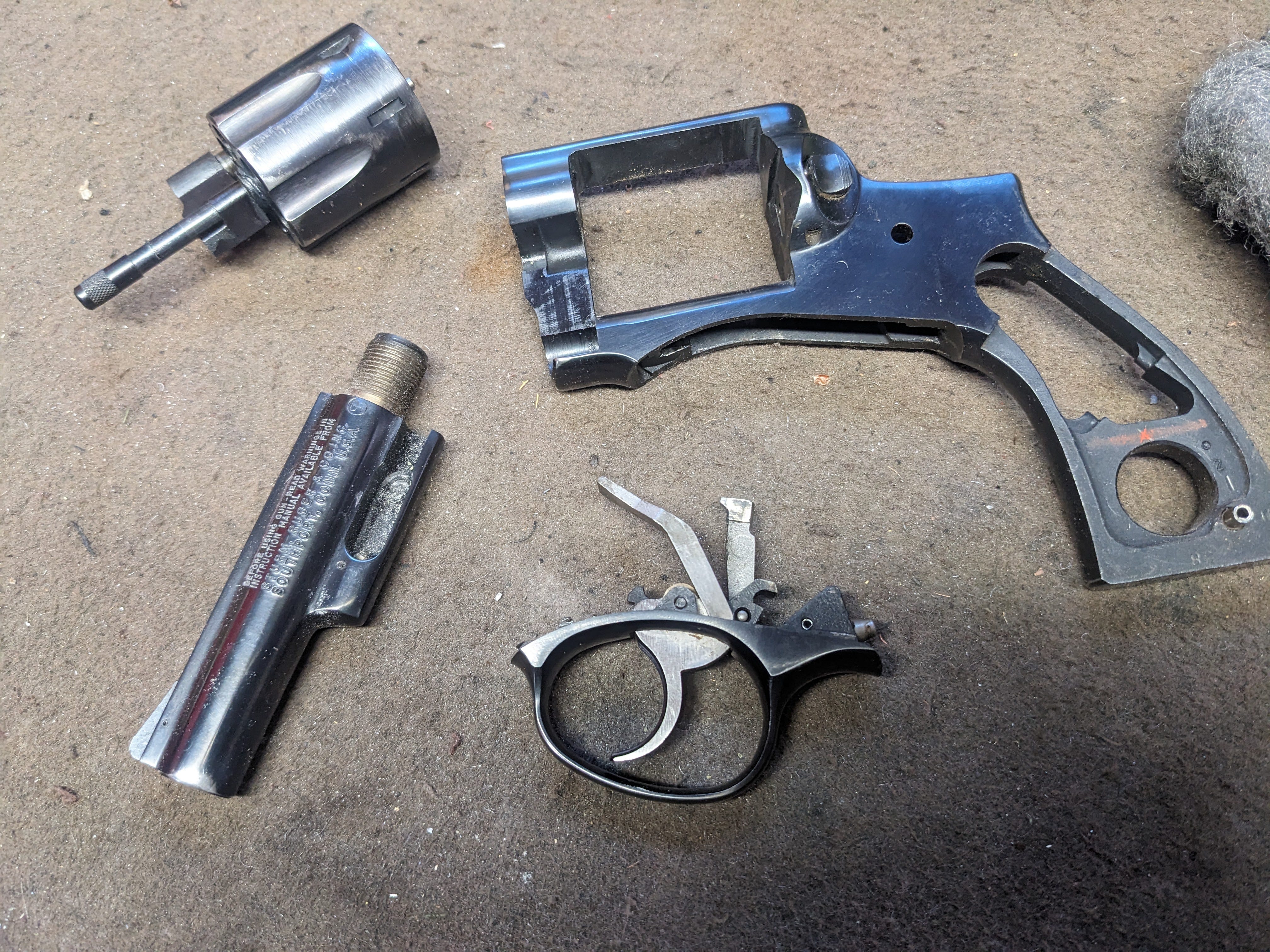
The first step, of course, is disassembly. As with all Rugers, the barrel was practically welded on, so it took quite a lot of force to come free. Other than that, disassembly is simple. The disassembly process is the same on all Ruger double-action revolvers. Remove the grips, then the hammer, and finally remove the trigger pack as a unit. Ruger really doesn’t get enough credit for how genius their little trigger pack is. As you can see in the images, this simple unit contains nearly every moving part in the revolver. I do think that Ruger is missing a trick, though. Now, with companies like Sig serializing their trigger groups, I think Ruger should do the same with their double-action revolvers. Imagine having a single trigger group in your SP101 that you could swap between a two-inch-barreled concealed model and a six-inch-barreled target model. I think it would sell, but then again, I’m weird about that kind of thing.
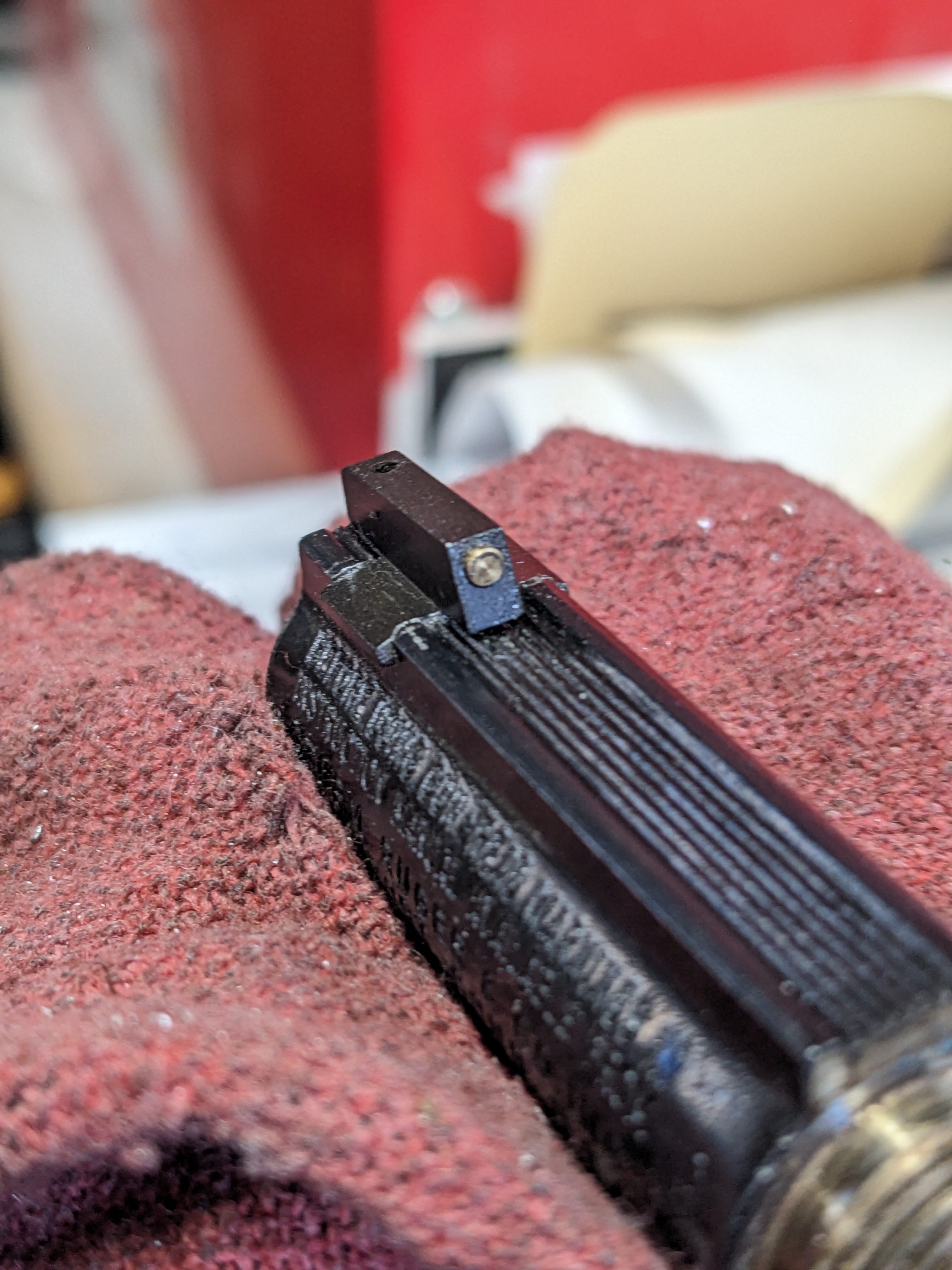
Now that the parts were free, it was time to do some things you can’t take back. I grabbed the hacksaw and took a couple of inches off the barrel, then chucked it in the lathe, faced it, and crowned it. Then I took it to the mill and dovetail-cut it to accept Novak front sights, as you would see on most 1911 revolvers. In this case, I could have recut the barrel for the original pin-in sight, but the Novak cut lets you sight in the gun, which the pin-in barrel does not. Plus, if my friend ever wants to add something like a Tritium night sight, the option is there and easy to add. If I ran the world, all revolvers with fixed rear sights would have drift-adjustable front sights. Most would say that sight adjustment is unnecessary on a “belly gun,” and maybe that’s true, but regardless of its intended use, I like my guns to hit where they are aimed. For me, I never know whether my defensive gun will be used to save my life or be pulled into the duty of taking a cottontail for dinner. That’s also why I like to be able to use a defensive gun as a single-action, which leads me to the next project.
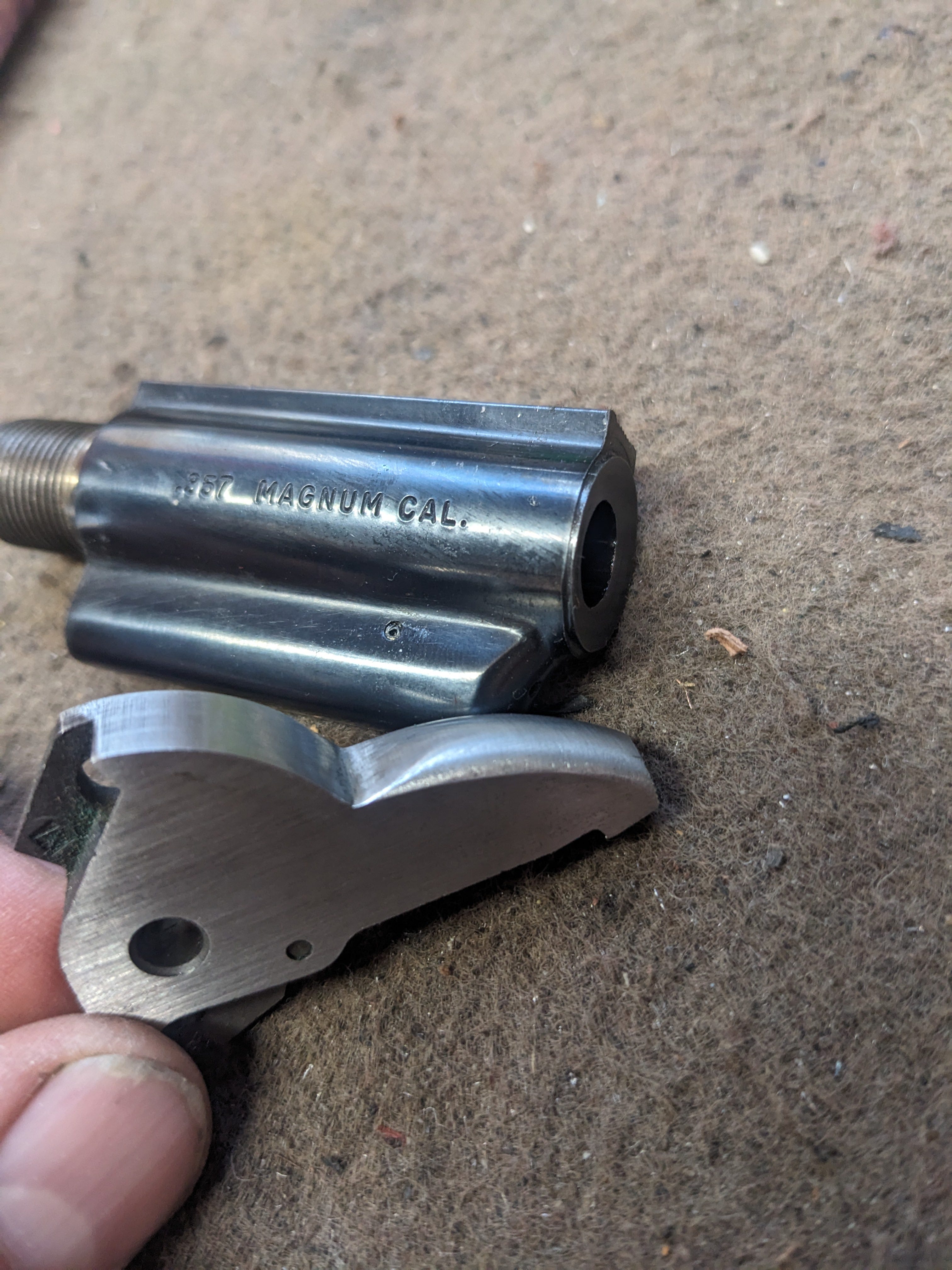
Bobbing the hammer. I’m not sure any revolver model is better designed for a bobbed hammer than the Ruger Six series. The hammer’s rounded profile screams for that spur to be chopped off, leaving the most perfect snag-free, rounded (yet still exposed) hammer you have ever seen. To my knowledge, Ruger only offered a few Speed-Six revolvers with factory bobbed hammers. After removing the spur and blending the metal, I serrated the top of the hammer to aid in single-action use. Unfortunately, this gun doesn’t have enough real estate on the hammer to cock it single-action, so the shooter has to squeeze the trigger slightly to get a good thumb grip.
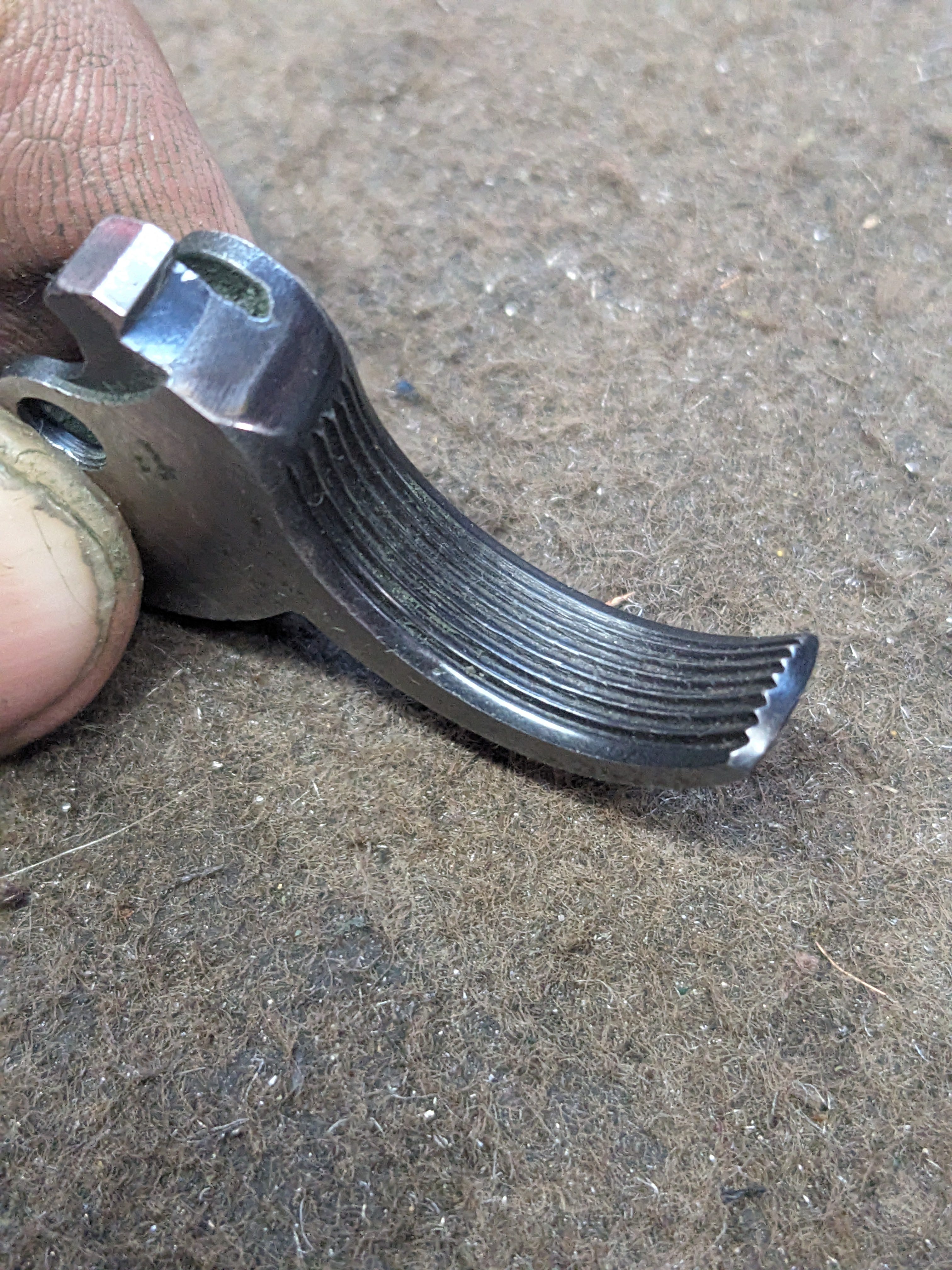
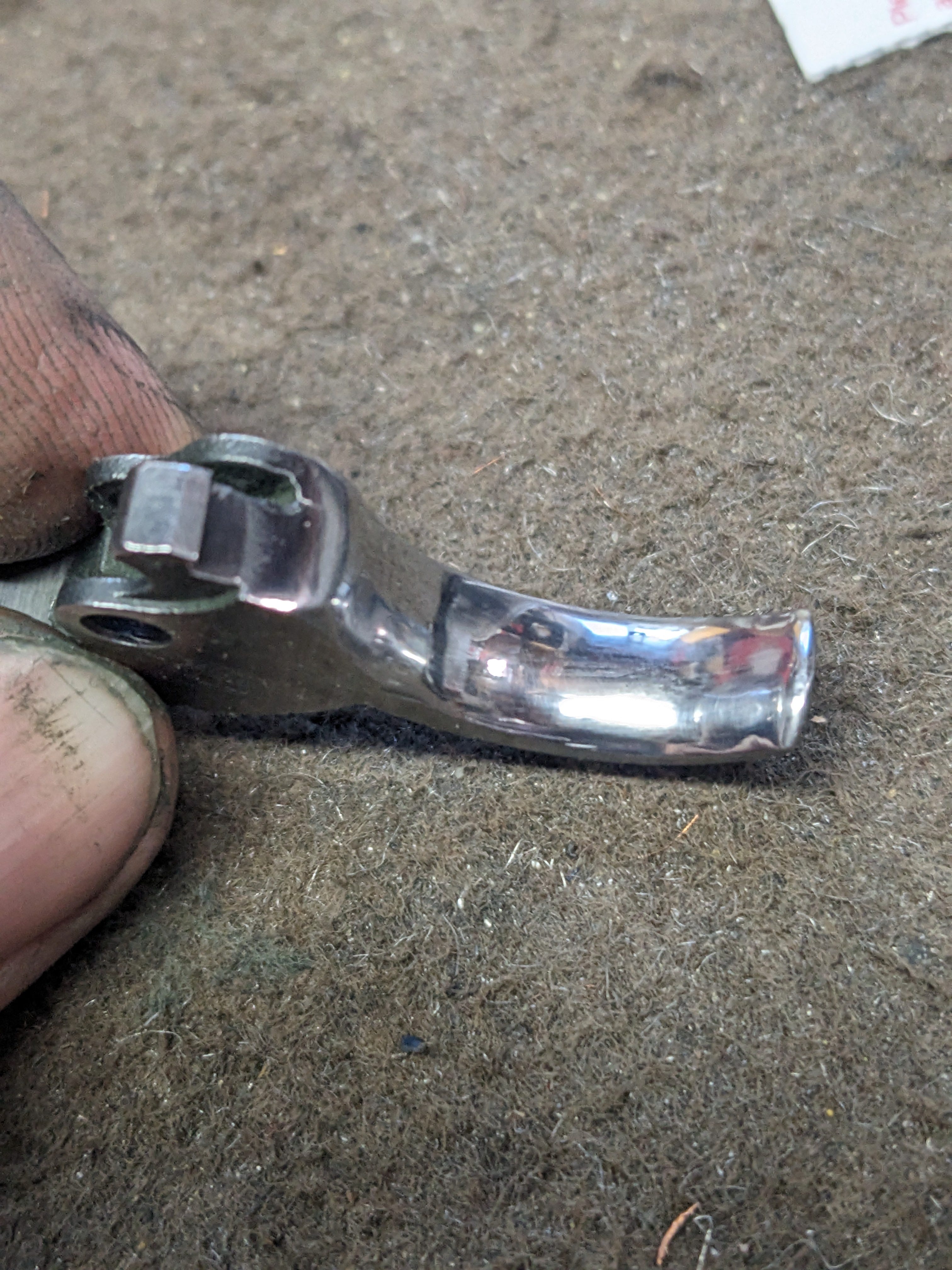
Moving on from the hammer, I also removed the trigger grooves and mirror-polished it. Shooting a grooved, double-action-only trigger can often be quite painful; polishing it this way eliminates the pain and improves the feel. I think this is a highly underrated modification that most people can do to their own guns that makes them so much more shootable.
Next, it was time to slick up the action. I have only done a handful of Ruger double-action revolvers over the years, but I can tell you I love working on them. I, of course, used a stone on the sears and such, but otherwise you can do most of the work with a buffing wheel. The nuances of Ruger design make it easy to polish internal parts. I then finished off the action job with a set of Wolff springs. Since this is a defensive gun, I didn’t go with the lightest option; I wanted to make sure reliability was as good as it could be, but even so, the Wolff springs shaved a couple of pounds off the double-action trigger pull and, more importantly, helped to make the action as smooth as French butter.
Shooting
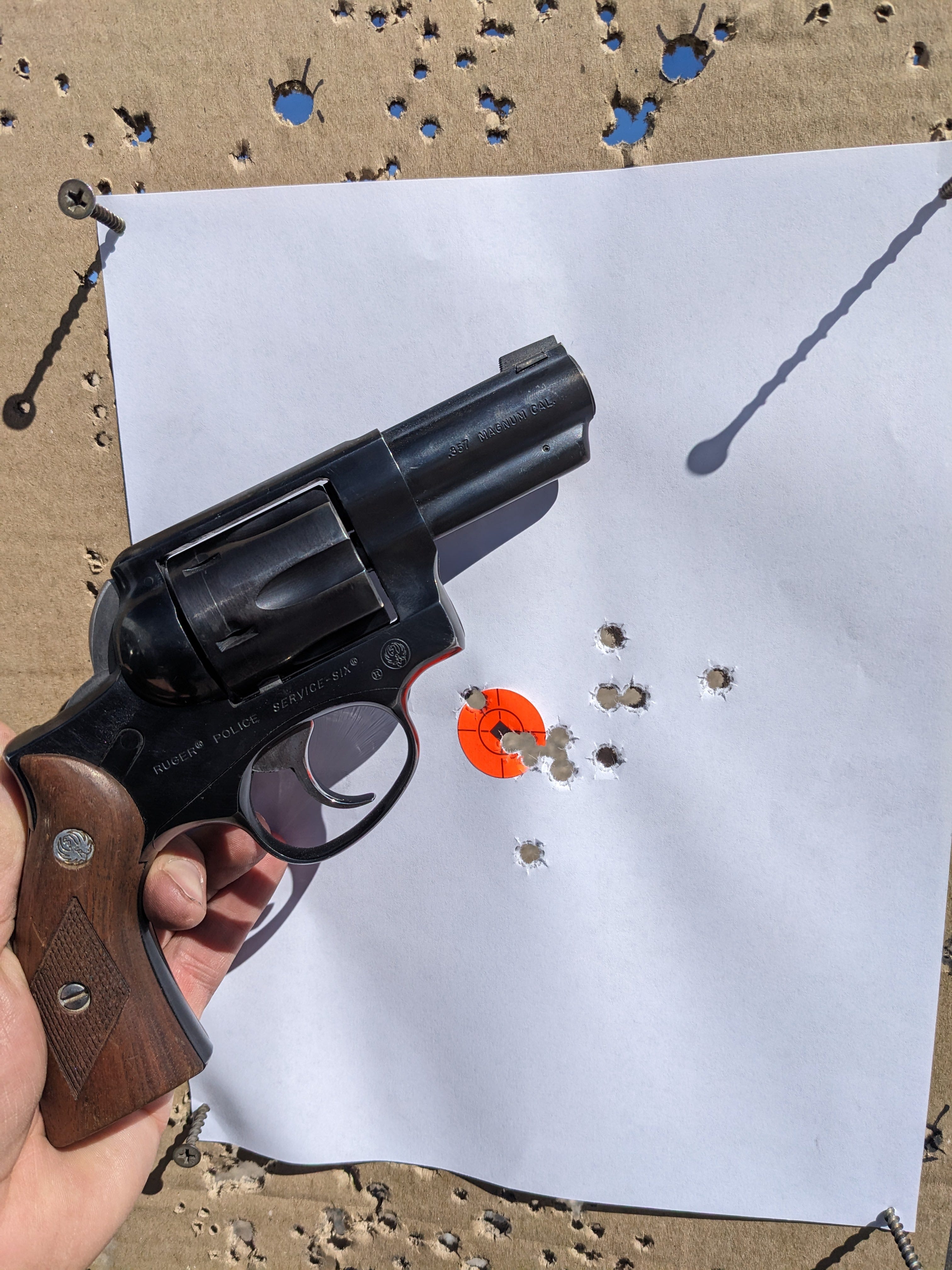
The first trip out to the range began with a disaster. Unfortunately, the beautiful brass bead sight you see in the pictures didn't work out; it was too high, and I couldn’t file it down without cutting into the bead. So I ordered just a plain Novak sight, and when it arrived, I hand-filed it to the right height at the range. Once I configured the sight properly, the weapon shot very well. Cheap 130g Winchester FMJs grouped to just over two inches at 15 yards, with flyers, and most rounds stayed within one inch. The real lovely part of this gun wasn’t the accuracy, though; it was the smooth shooting. This gun has that Goldilocks weight; it weighs just enough to soften the recoil, even with the scant few .357 Magnums that I fired without being obtrusive on the belt. It was a joy to shoot, and honestly, I spent at least 30 minutes wasting ammo and picking off clay pigeon pieces from the back berm at 40 yards.
All In.
I…love…this…gun! I can not believe I waited this long to dress up a six-series gun, and now that I have, I regret my life decisions. This gun, while not light, is an absolute marvel. It’s calm in the hand, even with .357 Magnum. It shoots well and has a serious overall demeanor. I must get one now. I have a few modifications in mind that would take it to the next level, but I think they might be too wacky for my friend. That said, this gun is awesome, and Nick, I hope you and your family enjoy it for generations to come. Lord knows it will last that long.
As you say, the Rugers are underated. I have a GP100 with a 4.2" barrel, the 'compliant' Canada version. I took it apart and polished and stoned the internals, shimmed the trigger and hammer, and installed a set of Wolff springs as well. I finished it with a set of Hogue grooved wooden grips that fit me perfectly. It's heavy, robust, and smooth as butter now. While it is my only Ruger revolver (actually my first revolver!), and I have a couple dozen Colts and Smiths in my safe, the Ruger is what resides in my bedroom safe. Because.
Thanks Matt! Great article!
I began my Ruger journey with a .357 Blackhawk and planned to get a Security Six but before I was able to get one the GP 100 was out. I have a three inch GP 100 and three inch SP 101. With Wilson springs and thousands of dry fires they are smooth and I really love them. Goldilocks would say your Service Six is just right between them.
Sadly I saw a report that Ruger has suspended production of basically all their revolvers except the Wrangler and some rifles. It was unclear whether they were just dropping them, updating them, or replacing them. Maybe this is connected to Berretta’ influence. Many of the revolvers have been showing limited availability for a while so this report seems likely.
Do you have any insight?